Amazon Replaced Rufus with Alexa for Shopping. Here’s Why That Matters for Brands.

Amazon Replaced Rufus with Alexa for Shopping. Here’s Why That Matters for Brands.

Cash Riley Jr.
Founder & CEO, The Machine Agency, Dallas, Texas

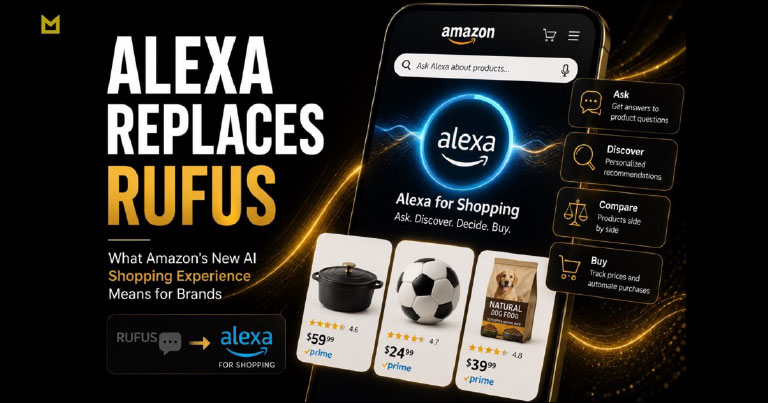
If you have been following Amazon’s AI initiatives, you have probably heard that Rufus is being replaced by Alexa for Shopping.

At first glance, this sounds like a simple product update. In reality, it represents a much bigger shift in how customers discover products on Amazon.

When Rufus launched, it existed as a separate AI shopping assistant. Customers could ask questions, compare products, and receive recommendations through a dedicated chatbot experience.

Now Amazon is integrating those capabilities directly into Alexa and placing them inside the core shopping journey. Customers can ask questions directly in the Amazon search bar, receive personalized recommendations, compare products, track prices, and even automate purchases through a single AI-powered assistant.

For brands, this is another sign that Amazon is moving away from traditional search and toward conversational commerce.

Why Amazon Replaced Rufus

The challenge with Rufus was not the technology. The challenge was adoption.

Most customers still shopped the same way they always had; by typing keywords into Amazon search and scrolling through results.

Alexa for Shopping changes that by bringing AI directly into the shopping experience. Instead of opening a separate assistant, customers can simply ask questions while browsing Amazon and receive answers, recommendations, product comparisons, and buying guidance instantly.

Amazon is essentially making AI the first layer between customers and products.

What This Means for Brands

For years, Amazon optimization was heavily focused on keywords. Keywords still matter, but they are no longer the whole story.

When a customer asks: “What’s the best supplement for senior dogs?” or “What cookware is easiest to clean?”

Amazon’s AI is trying to identify the best answer, not simply the product with the closest keyword match.

That means product listings need to provide context, clarity, and detailed information that helps Amazon understand exactly what the product does and who it is for.

The brands that win will be the brands that answer customer questions before customers even ask them.

The New Importance of Listing Quality

Alexa for Shopping pulls information from multiple areas of your product listing and shopping experience.

That includes:

  • Product titles
  • Bullet points
  • Product descriptions
  • A+ Content
  • Customer reviews
  • Product attributes
  • Customer questions and answers

The more complete and informative your listing is, the easier it becomes for Amazon’s AI to understand when your product should be recommended.

How Brands Should Prepare

Write for customer questions.

Think beyond keywords and focus on the actual questions shoppers ask before making a purchase. Your content should answer those questions naturally throughout the listing.

Strengthen your A+ Content.

Many brands treat A+ Content as a design project. In reality, it is becoming an information source for Amazon’s AI. Use it to explain benefits, use cases, differentiators, and common concerns.

Focus on review quality.

Reviews are no longer just social proof. They provide valuable context that helps Amazon connect products with customer needs. Reviews that mention specific outcomes and use cases are especially valuable.

Complete every product attribute.

Incomplete listings leave gaps in Amazon’s understanding of your product. The more information Amazon has, the more opportunities it has to surface your product in AI-driven recommendations.

    The Bottom Line

    Amazon replacing Rufus with Alexa for Shopping is not really about a chatbot. It is about Amazon making AI a core part of the shopping experience.

    Customers are moving from keyword searches to conversations. Instead of searching for products, they are increasingly asking questions and expecting recommendations.

    Brands that continue optimizing only for traditional search may find themselves losing visibility over time.

    The brands that invest in better content, stronger listings, and clearer product messaging today will be in the best position as AI becomes the new front door to product discovery on Amazon.

    Wondering how well your listings are positioned for Amazon’s evolving AI-driven shopping experience?

    TMA helps pet and consumer brands optimize their content, advertising, and marketplace strategy to stay ahead of platform changes and maximize visibility where it matters most.

    Schedule your free Amazon audit and we’ll show you exactly where the opportunities exist.

    Amazon Prime Day 2026 Is Officially a 96-Hour Event. Here’s What Brands Should Be Doing Right Now.

    Amazon Prime Day 2026 Is Officially a 96-Hour Event. Here’s What Brands Should Be Doing Right Now.

    Cash Riley Jr.
    Founder & CEO, The Machine Agency, Dallas, Texas

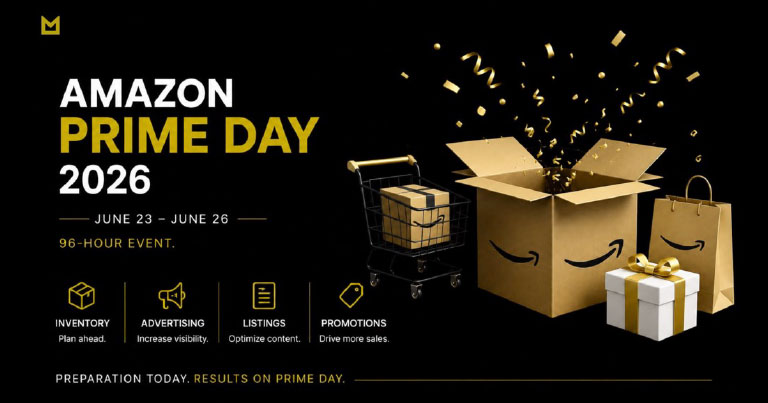
    Amazon has officially announced that Prime Day 2026 will run from June 23 through June 26, making it the longest Prime Day event to date.

    On the surface, that sounds like great news for sellers. More shopping hours. More traffic. More opportunities to generate sales.

    But Prime Day success is rarely determined during the event itself. It’s determined by the work happening right now.

    Every year, brands spend weeks planning discounts and increasing ad budgets, only to discover inventory issues, listing weaknesses, or campaign inefficiencies once traffic starts pouring in. By then, it’s often too late to make meaningful changes.

    The brands that perform best during Prime Day are usually not the ones offering the biggest discounts.

    They’re the ones that are prepared.

    Why Prime Day Success Starts Before Prime Day?

    A surge in traffic means nothing if products go out of stock halfway through the event.

    With Prime Day expanding to 96 hours this year, inventory planning becomes even more important. Brands should already be reviewing demand forecasts, monitoring replenishment timelines, and identifying potential bottlenecks across their catalog.

    Running out of inventory during Prime Day doesn’t just impact sales for four days. It can affect organic ranking, advertising performance, and overall momentum long after the event ends.

    Advertising is another area where preparation matters. Prime Day attracts more shoppers, but it also attracts more advertisers. Competition increases, CPCs rise, and brands that wait until the last minute often end up paying more for less visibility.

    Now is the time to review campaign structures, identify top-performing keywords, and ensure budgets are aligned with your Prime Day objectives.

    Just as importantly, brands should take a hard look at their listings.

    Prime Day often exposes weaknesses that go unnoticed during normal traffic periods. A weak main image, unclear positioning, poor A+ Content, or inconsistent messaging can significantly impact conversion rates when thousands of additional shoppers land on your product pages.

    More traffic doesn’t automatically mean more sales. More traffic simply magnifies whatever already exists. Strong listings convert better. Weak listings become expensive.

    Early Deals Are Already Live

    Amazon has already begun rolling out early Prime Day deals ahead of the official June 23 launch.

    For shoppers, that’s an opportunity to start saving early. For brands, it’s a reminder that Prime Day has already started for their competitors.

    The most successful Prime Day strategies are rarely built the week before the event. They are built weeks in advance through inventory planning, advertising optimization, content improvements, and promotional strategy.

      The Bottom Line

      Prime Day 2026 is shaping up to be one of Amazon’s biggest events yet.

      The extended event window creates more opportunity, but it also creates more competition.

      Brands that prepare now will enter Prime Day with a clear advantage. Brands that wait until the last minute will likely spend the event reacting instead of executing.

      If you’re unsure whether your account is ready, schedule a free Amazon audit with TMA. We’ll identify the opportunities, risks, and gaps that could impact your Prime Day performance.

      A+ Content vs. Brand Story: Which Actually Drives More Sales on Amazon?

      A+ Content vs. Brand Story: Which Actually Drives More Sales on Amazon?

      Cash Riley Jr.
      Founder & CEO, The Machine Agency, Dallas, Texas

      A+ Content and Brand Story are both powerful Amazon tools – but they serve different purposes. Here is how to use both strategically to increase conversions and build customer loyalty.

      If you have access to Amazon Brand Registry, you have two of the most underutilized conversion tools on the platform available to you: A+ Content and Brand Story. Both can appear on your product detail pages. Both can meaningfully improve performance. But they are not the same thing – and treating them interchangeably is a missed opportunity.

      Here is how to deploy each one strategically.

      What Is A+ Content?

      A+ Content replaces the plain-text product description with a richly formatted multimedia section. It allows you to add images, comparison charts, feature callouts, and layered storytelling that goes beyond what bullet points can convey.

      A+ Content is product-focused. Its primary job is to answer one question: why should I buy this specific product? It helps customers understand what they are getting, overcome objections, and make a confident purchase decision.

      Amazon has reported that well-executed A+ Content can increase conversion rates by 3 to 10 percent on average. For pet products – where customers often have real concerns about ingredients, safety, and efficacy – the impact can be significantly higher.

      What Is Brand Story?

      Brand Story is a separate module that sits above your A+ Content on the product detail page. It is brand-focused rather than product-focused. Its primary job is to answer a different question: why should I buy from this company?

      Brand Story is where you introduce your brand’s values, mission, and origin. For pet brands, this is where you speak to what makes your company different from the dozens of competitors who also sell joint supplements or grain-free food.

      Brand Story also displays your full product catalog, giving customers a direct pathway to explore everything you offer. This makes it a meaningful driver of cross-selling and repeat purchase behavior.

      Which One Drives More Sales?

      The honest answer is that it depends on where the customer is in their journey. A first-time visitor who has never heard of your brand benefits most from Brand Story – it builds the context and trust that makes the product purchase feel safe. A returning customer who already trusts your brand and is comparing products benefits most from A+ Content.

      This is why the strongest Amazon presences use both – and use them to complement each other rather than repeat the same information. Your Brand Story should not say the same things as your A+ Content. They should work together: who you are, why you exist, and why this specific product is the right choice.

      Common Mistakes to Avoid

      Generic A+ Content that could belong to any brand in your category. If a competitor could swap in their logo and nothing would change, your A+ Content is not doing its job.

      Treating Brand Story as optional. For pet brands especially, the emotional connection between the brand and the customer’s pet is powerful. Brand Story is where that connection gets built.

      Ignoring mobile rendering. A significant share of Amazon shopping happens on mobile. A+ Content and Brand Story that look great on desktop can be difficult to navigate on a phone. Always preview and optimize for mobile before publishing.

        The Bottom Line

        A+ Content converts the visitor. Brand Story converts the visitor into a loyal customer. Together, they build the kind of brand equity that is difficult for competitors to undercut on price alone.

        TMA creates high-converting A+ Content and Brand Story for pet and consumer brands. Schedule a free audit at themachineagency.com/free-amazon-audit to see how your current content stacks up.

        How to Optimize Your Amazon Listings for Rufus – Amazon’s AI Shopping Assistant

        How to Optimize Your Amazon Listings for Rufus – Amazon’s AI Shopping Assistant

        Cash Riley Jr.
        Founder & CEO, The Machine Agency, Dallas, Texas

        Amazon’s AI shopping assistant Rufus is changing how customers discover products. Here is what pet and consumer brands need to know to stay visible and win more sales.

        If you have been managing an Amazon business for any length of time, you are used to the algorithm changing. But what Amazon introduced with Rufus is something different — and if you are not paying attention to it, your listings may already be losing ground.

        Rufus is Amazon’s AI-powered shopping assistant, built directly into the Amazon app and shopping experience. Customers can ask Rufus conversational questions –

        “What should I look for in a joint supplement for dogs?” or “Which cat food is best for indoor cats with sensitive stomachs?”

        — and Rufus surfaces product recommendations based on its understanding of your listing content.

        This is a meaningful shift in how customers discover products on Amazon. And it means your listing optimization strategy needs to evolve.

        What Rufus Looks At

        Rufus does not simply scan your title and bullet points the way the traditional A9 algorithm does.

        It reads your listing holistically — including your product description, A+ Content, customerreviews, and Q&A section — and uses all of that information to determine whether your product is the right answer to a customer’s question.

        That means listings optimized for keyword density alone may underperform in a Rufus environment. What Rufus rewards is clarity, context, and relevance.

          How to Optimize for Rufus

          Write for questions, not just keywords. Think about what your target customer is actually asking.

          A pet supplement brand should not just target “dog hip and joint supplement” – they should also address “what helps dogs with arthritis pain?” and “what ingredients support joint health in senior dogs?” Incorporate natural-language phrases like these into your bullets and description.

          Strengthen your A+ Content. Rufus reads A+ Content. If your enhanced content is thin or generic, you are leaving visibility on the table. Use it to explain the science behind your product, address common concerns, and answer the questions customers would ask Rufus directly.

          Keep your Q&A current and complete. The Q&A section is underutilized by most sellers, but it is rich content for Rufus. Answer every customer question on your listing and add your own Q&As if the section is sparse.

          Use your product description strategically. Many sellers neglect the product description in favor of bullets and A+ Content. For Rufus, a well-written description that explains use cases, benefits, and differentiators adds meaningful context that improves discoverability.

          Earn reviews that contain relevant language. Rufus surfaces review content. Customers who describe specific benefits in their reviews – “my 11-year-old Lab stopped limping after two weeks” – are helping Rufus connect your product to the right search queries. This makes your review generation strategy more important than ever.

            The Bottom Line

            Amazon is investing heavily in AI as the primary layer between customers and products. Rufus is not a gimmick – it is the direction the platform is moving in. Brands that optimize for this environment now will have a significant advantage over those still writing listings the same way they were three years ago.

            Ready to see how your listings perform against Amazon’s latest algorithm? Schedule your free Amazon audit at themachineagency.com/free-amazon-audit and we will show you exactly where the gaps are.

            Why Most Pet Brands Fail on Amazon in Year One – And How to Avoid It

            Why Most Pet Brands Fail on Amazon in Year One – And How to Avoid It

            Cash Riley Jr.
            Founder & CEO, The Machine Agency, Dallas, Texas

            The majority of pet brands that launch on Amazon struggle to survive year one. Here are the most common failure patterns – and what successful brands do differently.

            Amazon is the largest pet product marketplace in the world. It is also an unforgiving one.

            Despite the enormous opportunity, most pet brands that launch on Amazon struggle to gain traction — and many do not survive past year one.

            Having worked with dozens of pet brands across supplements, accessories, food, and health products, TMA has seen the same failure patterns repeat themselves. Understanding them is the first step to avoiding them.

            Failure Pattern 1: Launching Without Market Validation

            The most common mistake pet brands make on Amazon is launching a product before understanding the category they are entering. They identify a product, build inventory, and go live – without analyzing demand, competition, pricing dynamics, or realistic profit margins.

            Amazon is not a field of dreams. Brands that survive year one know exactly what it costs to acquire a customer in their category, what conversion rate they need to be profitable, and which keywords they can realistically rank for given their competition.

            Failure Pattern 2: Treating Amazon Like a Website

            Amazon is its own ecosystem with its own rules, algorithms, and customer expectations. Brands that approach it the same way they approach their Shopify store almost always underperform.

            Your listing is not a product page — it is a ranking document, a sales page, and a trust signal all at once. Your images are not just photos — they are your first and most powerful sales tool.

            Every element of your Amazon presence needs to be optimized for how Amazon works, not how your website works.

            Failure Pattern 3: Setting and Forgetting Advertising

            Many pet brands launch PPC campaigns, see mediocre results, and either abandon them orleave them running on autopilot. Neither approach works.

            Amazon advertising requires active management — keyword harvesting, bid optimization, negative keyword pruning, and continuous testing. A campaign that is not actively managed is either spending money it should not, or leaving opportunity on the table by not scaling what is working.

            Failure Pattern 4: Ignoring Unit Economics

            Amazon’s fee structure is complex. FBA fees, referral fees, storage fees, advertising costs, return rates – these add up quickly, especially in pet product categories where margins can be thin.

            Brands that do not have a clear picture of their true unit economics on Amazon routinely discover they are losing money on every sale. By the time they realize it, they are already in a hole that is difficult to climb out of.

            Failure Pattern 5: Running Out of Inventory

            A stockout on Amazon is painful in ways that extend far beyond lost sales. When you run out of stock, your organic ranking drops. Rebuilding that ranking takes time and ad spend. Brands that survive year one treat inventory planning as a strategic function, not an afterthought.

              What Successful Pet Brands Do Differently

              They start with data. They build their listings to convert, not just to rank. They manage their advertising actively. They know their numbers. And they treat Amazon as a full-time channel that requires dedicated attention and expertise.

              That is the difference between a pet brand that makes it and one that does not.

              Not sure where your brand stands? Schedule a free Amazon audit at themachineagency.com/free-amazon-audit and find out exactly where the opportunities are.