The True Cost of a High ACoS: How Pet Brands Are Quietly Losing Margin on Amazon

The True Cost of a High ACoS: How Pet Brands Are Quietly Losing Margin on Amazon

Cash Riley Jr.
Founder & CEO, The Machine Agency, Dallas, Texas

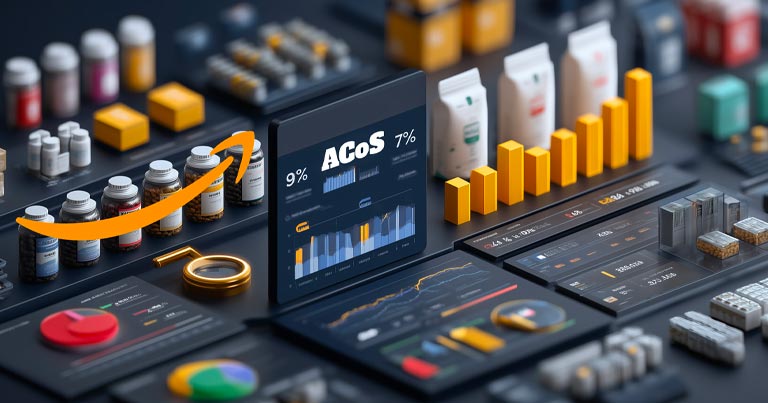
ACoS is one of the most watched metrics in Amazon advertising – but most pet brands are misreading it. Here is what it actually tells you and how to use it to protect your margin.

Advertising Cost of Sales. ACoS. If you are selling on Amazon, you know the metric. You probably check it regularly. You may even have a target ACoS you are working toward. But there is a good chance you are not using it the way it was designed to be used — and that gap is quietly eroding your margin.Here is what most pet brands get wrong about ACoS, and how to fix it.

What ACoS Actually Measures

ACoS is the ratio of your Amazon ad spend to the revenue that ad spend generated. If you spend $100 on ads and those ads generate $400 in sales, your ACoS is 25%.

What ACoS does not tell you is whether that 25% is good or bad. That depends entirely on your unit economics — your product cost, your FBA fees, your referral fees, your return rate, and your desired profit margin.

A 25% ACoS on a product with a 60% gross margin is a profitable campaign. A 25% ACoS on a product with a 20% gross margin is a money-losing one. The metric is the same. The outcome is completely different.

Your Break-Even ACoS

Every product you sell on Amazon has a break-even ACoS — the point at which your ad spend exactly consumes your available margin. If your ACoS exceeds your break-even, you are losing money on every advertised sale.

To calculate it: take your gross margin percentage after all Amazon fees and cost of goods. That number is your break-even ACoS. If your product sells for $30, costs $8 to produce, and your Amazon fees total $9, your gross margin is $13 — roughly 43%. Any campaign running above a 43% ACoS is operating at a loss.

The Mistake Most Pet Brands Make

Most pet brands set ACoS targets based on benchmarks they read somewhere – “20% is good” or “30% is acceptable” – without anchoring those targets to their actual unit economics.

The result is that brands running at “acceptable” ACoS levels are often losing money without knowing it. And brands fixated on driving ACoS below a generic target are sometimes cutting off profitable campaigns in the process.

What to Do Instead

Calculate your break-even ACoS for every product in your catalog. This is not a one-time exercise – it needs to be updated when your costs change. Separate your awareness campaigns from your conversion campaigns. A top-of-funnel Sponsored Brands campaign may warrant a higher ACoS than a Sponsored Products campaign targeting high-intent keywords. Blending them into a single ACoS target obscures what isactually performing.

Consider Total Advertising Cost of Sales (TACoS) – the ratio of ad spend to total revenue including organic sales. TACoS gives you a more complete picture of how your advertising investment is contributing to your overall business, not just ad-attributed revenue.

    The Bottom Line

    ACoS is a useful metric, but only when anchored to your actual economics. If you do not know your break-even ACoS for every product you are advertising, you do not have a complete picture of whether your campaigns are making you money or costing you money.

    TMA conducts profitability analysis as part of every engagement. Schedule a free Amazon audit at themachineagency.com/free-amazon-audit to see where your advertising margins really stand.

    A+ Content vs. Brand Story: Which Actually Drives More Sales on Amazon?

    A+ Content vs. Brand Story: Which Actually Drives More Sales on Amazon?

    Cash Riley Jr.
    Founder & CEO, The Machine Agency, Dallas, Texas

    A+ Content and Brand Story are both powerful Amazon tools – but they serve different purposes. Here is how to use both strategically to increase conversions and build customer loyalty.

    If you have access to Amazon Brand Registry, you have two of the most underutilized conversion tools on the platform available to you: A+ Content and Brand Story. Both can appear on your product detail pages. Both can meaningfully improve performance. But they are not the same thing – and treating them interchangeably is a missed opportunity.

    Here is how to deploy each one strategically.

    What Is A+ Content?

    A+ Content replaces the plain-text product description with a richly formatted multimedia section. It allows you to add images, comparison charts, feature callouts, and layered storytelling that goes beyond what bullet points can convey.

    A+ Content is product-focused. Its primary job is to answer one question: why should I buy this specific product? It helps customers understand what they are getting, overcome objections, and make a confident purchase decision.

    Amazon has reported that well-executed A+ Content can increase conversion rates by 3 to 10 percent on average. For pet products – where customers often have real concerns about ingredients, safety, and efficacy – the impact can be significantly higher.

    What Is Brand Story?

    Brand Story is a separate module that sits above your A+ Content on the product detail page. It is brand-focused rather than product-focused. Its primary job is to answer a different question: why should I buy from this company?

    Brand Story is where you introduce your brand’s values, mission, and origin. For pet brands, this is where you speak to what makes your company different from the dozens of competitors who also sell joint supplements or grain-free food.

    Brand Story also displays your full product catalog, giving customers a direct pathway to explore everything you offer. This makes it a meaningful driver of cross-selling and repeat purchase behavior.

    Which One Drives More Sales?

    The honest answer is that it depends on where the customer is in their journey. A first-time visitor who has never heard of your brand benefits most from Brand Story – it builds the context and trust that makes the product purchase feel safe. A returning customer who already trusts your brand and is comparing products benefits most from A+ Content.

    This is why the strongest Amazon presences use both – and use them to complement each other rather than repeat the same information. Your Brand Story should not say the same things as your A+ Content. They should work together: who you are, why you exist, and why this specific product is the right choice.

    Common Mistakes to Avoid

    Generic A+ Content that could belong to any brand in your category. If a competitor could swap in their logo and nothing would change, your A+ Content is not doing its job.

    Treating Brand Story as optional. For pet brands especially, the emotional connection between the brand and the customer’s pet is powerful. Brand Story is where that connection gets built.

    Ignoring mobile rendering. A significant share of Amazon shopping happens on mobile. A+ Content and Brand Story that look great on desktop can be difficult to navigate on a phone. Always preview and optimize for mobile before publishing.

      The Bottom Line

      A+ Content converts the visitor. Brand Story converts the visitor into a loyal customer. Together, they build the kind of brand equity that is difficult for competitors to undercut on price alone.

      TMA creates high-converting A+ Content and Brand Story for pet and consumer brands. Schedule a free audit at themachineagency.com/free-amazon-audit to see how your current content stacks up.

      Amazon Brand Registry: What It Is, Why You Need It, and How to Get the Most from It

      Amazon Brand Registry: What It Is, Why You Need It, and How to Get the Most from It

      Cash Riley Jr.
      Founder & CEO, The Machine Agency, Dallas, Texas

      Amazon Brand Registry is one of the most powerful tools available to pet and consumer product brands. Here is everything you need to know to enroll and use it effectively.

      If you own a registered trademark and sell on Amazon, Brand Registry is not optional – it is foundational. It is the gateway to some of Amazon’s most powerful brand protection and growth tools, and brands that are not enrolled are operating at a meaningful disadvantage compared to those that are.

      Here is what Brand Registry is, what it unlocks, and how to get the most out of it.

      What Is Amazon Brand Registry?

      Amazon Brand Registry is a program that verifies brand ownership and gives enrolled brands access to an expanded set of tools, protections, and advertising features. To enroll, you need a registered trademark (active, not pending) from a government trademark office such as the USPTO.

      Once enrolled, Amazon recognizes you as the authorized brand owner for your registered trademarks – which changes how the platform treats your listings and how much control you have over your brand’s presence.

      What Brand Registry Unlocks

      Brand Protection Tools. Brand Registry gives you access to Amazon’s Report a Violation tool, which allows you to proactively search for and report infringing listings, counterfeit products, and unauthorized sellers using your brand name or trademarked assets. Amazon takes these reports seriously and acts on them faster for registered brand owners than for non-enrolled sellers.

      A+ Content and Brand Story. Both of these content tools – which can meaningfully improve conversion rates – require Brand Registry enrollment. Without it, you are limited to plain-text product descriptions.

      Amazon Stores. Your branded storefront on Amazon – a dedicated page that showcases your full catalog and tells your brand story – requires Brand Registry. Stores also provide access to unique traffic data through the Store Insights dashboard.

      Sponsored Brands Advertising. Sponsored Brands ads – the banner-style ads that appear at the top of Amazon search results with your logo, a custom headline, and multiple products – are only available to Brand Registry enrollees. These are some of the most visible and brand-building ad formats on the platform.

      Amazon Posts and Amazon Live. Both social-style content features that allow brands to engage customers with educational and lifestyle content are accessible only through Brand Registry.

      Transparency and Project Zero. For brands dealing with serious counterfeiting problems, Amazon’s Transparency program and Project Zero are available to Brand Registry members.

      How to Enroll

      To enroll in Brand Registry you need: an active registered trademark, the trademark registration number, and an Amazon Seller Central or Vendor Central account associated with the trademark owner.

      Go to brandregistry.amazon.com, submit your application, and Amazon will verify your ownership – typically within a few days.

      If your trademark is still pending, Amazon offers IP Accelerator – a program that connects brands with pre-vetted IP law firms that can expedite trademark registration and grant provisional Brand Registry access while your application is in process.

      Common Mistakes After Enrollment

      Getting enrolled and then not using the tools. Brand Registry is only valuable if you actively leverage its features. Set up your Brand Store, create A+ Content, launch Sponsored Brands campaigns, and actively monitor the Report a Violation tool.

      Assuming Brand Registry eliminates all unauthorized sellers. It significantly reduces the problem and gives you tools to address it, but it is not a one-time fix. Active brand protection requires ongoing monitoring and reporting.

      Failing to update registry information when trademarks change. If your trademark is updated, renewed, or expanded, make sure your Brand Registry information stays current. Discrepancies can create gaps in your protection.

        The Bottom Line

        Amazon Brand Registry is one of the highest-leverage investments a pet or consumer product brand can make. The tools it unlocks – from A+ Content and Sponsored Brands to brand protection and customer reporting – directly impact your ability to compete, convert, and protect your business on Amazon.

        If you are not yet enrolled, prioritize it. If you are enrolled but not fully utilizing the available tools, there is meaningful growth and protection you are leaving on the table.

        TMA manages Brand Registry enrollment, brand protection, and full Brand Registry tool utilization for pet and consumer brands. Schedule a free audit at themachineagency.com/free-amazon-audit to see what you might be missing.

        Inventory Planning for Pet Brands: How to Avoid Stockouts During Peak Season

        Inventory Planning for Pet Brands: How to Avoid Stockouts During Peak Season

        Cash Riley Jr.
        Founder & CEO, The Machine Agency, Dallas, Texas

        Running out of stock on Amazon is more damaging than most pet brands realize. Here is how to plan inventory strategically so you never lose your ranking at the worst possible time.

        Of all the operational challenges pet brands face on Amazon, inventory planning is the one most likely to undo months of hard work in a matter of days. A stockout does not just cost you immediate sales – it sets your organic ranking back, increases your advertising costs to rebuild momentum, and hands market share to competitors who were prepared when you were not.

        How Stockouts Damage Your Ranking

        Amazon’s algorithm rewards in-stock reliability. When you run out of stock, your listing either goes inactive or displays as unavailable. During that window, your organic ranking decays – sometimes rapidly, depending on how competitive your category is.

        When you restock and reactivate, you do not pick up where you left off. You are starting the ranking rebuild process from a lower position, which means more advertising spend to regain visibility. The true cost of a stockout extends far beyond the sales lost during the out-of-stock window.

        Build a Demand Forecast

        Effective inventory planning starts with accurate demand forecasting. For most pet brands, this means looking at three data sets: historical sales velocity, seasonal trends in your category, and the impact of your planned promotions and advertising campaigns.

        Your historical velocity tells you what you have sold in comparable time periods. Amazon’s Brand Analytics tools can show you seasonal trends in your category. And your promotional calendar tells you when you are planning to accelerate sales, which will consume inventory faster than your baseline forecast.

        Account for Amazon’s Lead Times

        One of the most common inventory planning mistakes is underestimating the time it takes to get product into FBA. Amazon’s inbound receiving can take anywhere from several days to several weeks during peak periods. If you are waiting until you are nearly out of stock to send your next replenishment, you are planning to fail.

        Build your replenishment triggers around realistic lead times – not best-case scenarios. Account for production time, shipping time, and FBA processing. Build in buffer stock that covers you if any of those timelines extend.

        Plan for Peak Season Early

        For pet brands, the calendar has predictable high-demand periods: the holiday season, the spring pet adoption surge, Prime Day, and summer. The mistake most brands make is treating peak season preparation as something they will get to. By the time they think about it, their production slots are taken, their freight options are limited, and they are scrambling to avoid a stockout during the highest-volume period of the year.

        Effective brands treat peak season inventory planning as a strategic function that starts 90 to 120 days before the peak. That timeline gives you enough runway to order production, ship product, and get inventory into FBA before the rush begins.

        Use Amazon’s Data Tools

        Amazon provides inventory-related data in Seller Central that most brands underutilize. The Inventory Performance Index score, the Days of Supply metric, and the Restock Recommendations report all give you actionable information about the health of your inventory position.

        Pay particular attention to your Days of Supply metric. Amazon’s algorithm flags listings with low days of supply for potential suppression. Keeping this metric healthy is both an operational necessity and a ranking strategy.

          The Bottom Line

          Inventory planning is not glamorous – but it is the foundation everything else is built on. Brands that get it right have a compounding advantage: their ranking stays strong, their advertising efficiency improves, and their customer experience is consistent.

          TMA manages inventory planning and FBA strategy for pet and consumer brands. Schedule a free audit at themachineagency.com/free-amazon-audit to review your current inventory position.