Bringing Commercial Strategy to Point-of-Care Pet Diagnostics
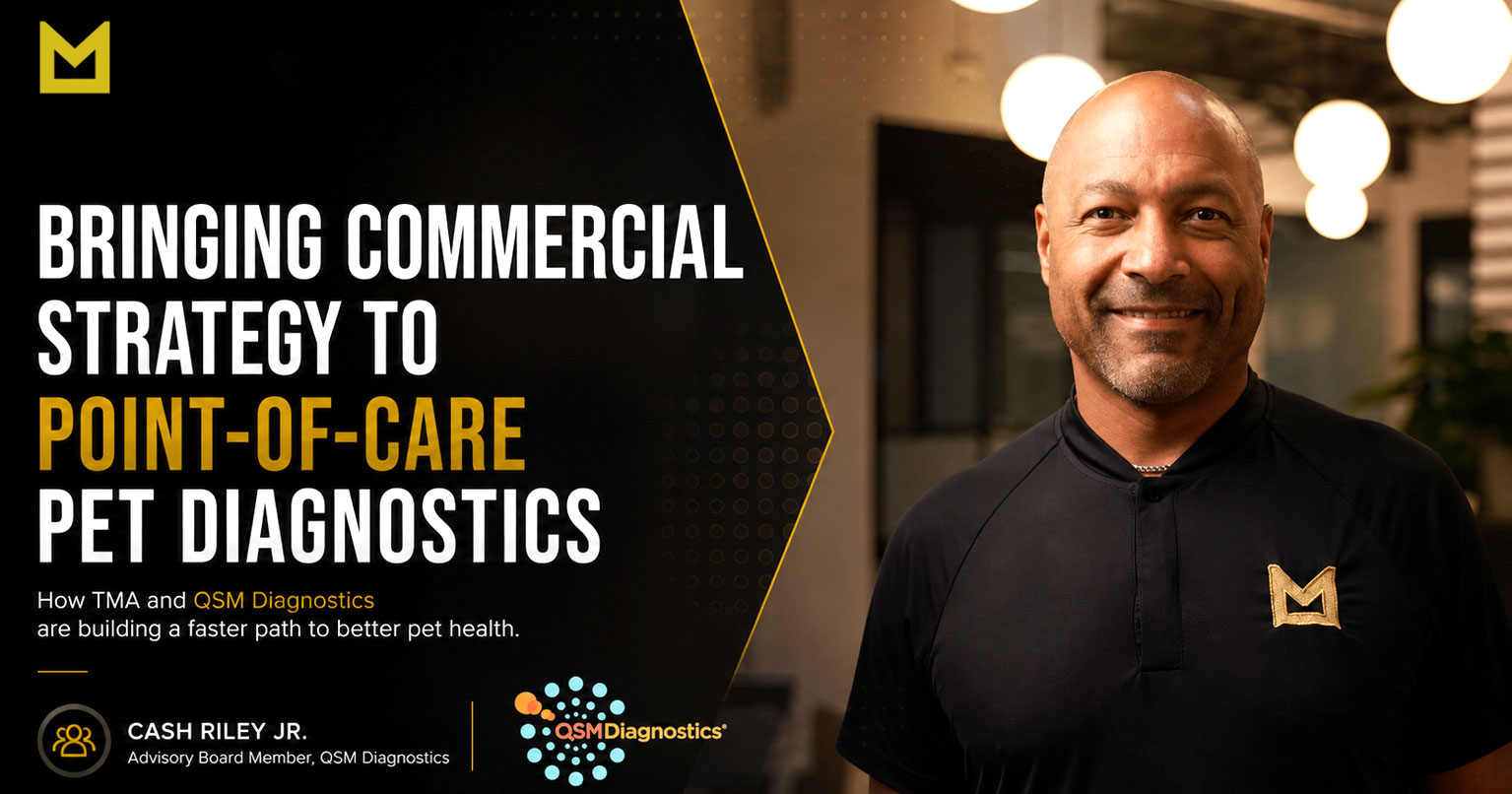
Cash Riley Jr.
Founder & CEO, The Machine Agency, Dallas, Texas
The future of pet health depends not only on better treatments, but on identifying health issues earlier.
That is why The Machine Agency (TMA) is excited to bring its marketplace and commercial expertise to the next stage of veterinary diagnostics through Cash Riley Jr.’s new role on the QSM Diagnostics Advisory Board.
From Days to Minutes
QSM Diagnostics is a Boston-based medtech company spun out of Northeastern University’s Goluch Research Group. Its technology is focused on developing point-of-care diagnostic tools designed to identify bacterial infections in minutes instead of days, beginning with veterinary medicine.
The potential impact is significant: faster access to diagnostic information can help veterinarians and pet parents identify issues earlier and make more informed decisions about care.
Where Commercial Strategy Meets Pet Health
In his advisory role, Cash will help shape QSM Diagnostics’ go-to-market and marketing strategy, drawing on TMA’s experience building and scaling brands within the pet health and pet care ecosystem.
A key focus will be expanding access to QSM’s diagnostic test kits across a broader network of veterinarians, animal clinics, and pet parents globally.
For TMA, this represents a natural extension of the work we have already been doing in the pet space.
Over the past several years, we have worked closely with brands serving pet health and pet care needs. That experience has reinforced an important principle: better products only create impact when the people who need them can actually find and access them.
Moving From Reactive to Earlier Intervention
What makes QSM Diagnostics particularly compelling is the mission behind the technology.
Instead of addressing certain health issues only after they become more apparent, faster diagnostics can create an opportunity to identify potential problems earlier and support more timely veterinary care.
That matters to everyone involved; pet parents, animals, veterinarians, and the brands developing solutions for them.
Looking Ahead
TMA is excited to bring its commercial strategy, marketplace experience, and relationships within the pet ecosystem to a company working to move veterinary diagnostics forward.
The opportunity is bigger than a new diagnostic technology. It is about making better information available sooner, and helping build a more accessible path toward better pet health.
Better diagnostics. Earlier insights. Better outcomes for pets.
The Machine never stops. Neither should innovation in pet health.